I always love coming back to this page, reminds me of me when I joined up and went to Germany, where by the way my dad was living!
He went to study art in Paris with a full bright scholarship and met my mom… He never talked much about the war, but for a few stories… http://www.galerie-schrade.de/home/kuenstler/s/shapiro-shmuel/biographie-shmuel-shapiro/
Some bio on Sidney Shapiro,
Shmuel Shapiro was born September 19, 1924, in New Britain, Connecticut, to Jewish immigrants who’d come from Russia around the turn of the century — the family ran a small dairy business. He started art school at 15, in Hartford, then served in Europe in WWII (286th Engineer Battalion, part of the liberation of Colmar) before returning to finish his training in Boston, where he studied under Karl Zerbe — the teacher who pulled him toward German Expressionism and American Abstract Expressionism alike. He went on to the Art Students League in New York, then Indiana University for his MFA.
A Fulbright took him to Paris in 1955, where he worked in Atelier 17, crossed paths with Miró, Chagall, and Giacometti, and had Brancusi and Tinguely as studio neighbors. From there he moved constantly for two decades — the US, Switzerland, France, Germany — restless in a way that seems to have cost him and his family real stability, by his biographer’s account. His Karlsruhe years (1963–67) were significant: he joined the small Jewish community there and made a graphic cycle called “Tor des Todes” (“Gate of Death”) confronting the Holocaust directly. Later, in Basel, he produced the “Mazel Tov Suite,” thirteen large lithographs, and befriended Mark Tobey.
In 1975 he met gallerist Ewald Schrade, who introduced him to Kisslegg and the Allgäu — and in 1976 your father settled permanently in Immenried, staying until his death. He taught at the Winterakademie there from 1975–79, which is also where he met his partner, Ruth Lichti. He died August 12, 1983, in Ravensburg, at 58, reportedly right after finishing a painting.
His style got called a “sensual, passionate festival of color” — rooted in American Action Painting but layered with European Informel and Expressionist gesture. He showed at the Corcoran Gallery in Washington, the Musée de l’Art Moderne in Paris, the Deutscher Künstlerbund, Edinburgh Art Festival, and repeatedly at Art Basel starting in 1970. His work is held in the Tate’s collection in London, and the Allgäu remembers him too — there was a retrospective at the Museum Rudolf Wachter in Kisslegg’s Neues Schloss in 2008, and Galerie Schrade still represents his estate.
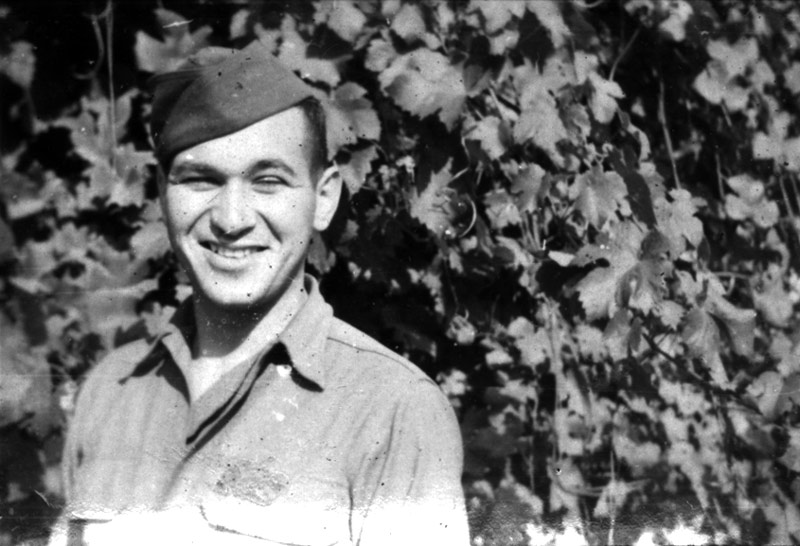
I always love coming back to this page, reminds me of me when I joined up and went to Germany, where by the way my dad was living!
He went to study art in Paris with a full bright scholarship and met my mom… He never talked much about the war, but for a few stories…
http://www.galerie-schrade.de/home/kuenstler/s/shapiro-shmuel/biographie-shmuel-shapiro/
This is a great memorial to a great generation..
Thanks
Pingback: Austrian Strudel – Stir the Pots
Some bio on Sidney Shapiro,
Shmuel Shapiro was born September 19, 1924, in New Britain, Connecticut, to Jewish immigrants who’d come from Russia around the turn of the century — the family ran a small dairy business. He started art school at 15, in Hartford, then served in Europe in WWII (286th Engineer Battalion, part of the liberation of Colmar) before returning to finish his training in Boston, where he studied under Karl Zerbe — the teacher who pulled him toward German Expressionism and American Abstract Expressionism alike. He went on to the Art Students League in New York, then Indiana University for his MFA.
A Fulbright took him to Paris in 1955, where he worked in Atelier 17, crossed paths with Miró, Chagall, and Giacometti, and had Brancusi and Tinguely as studio neighbors. From there he moved constantly for two decades — the US, Switzerland, France, Germany — restless in a way that seems to have cost him and his family real stability, by his biographer’s account. His Karlsruhe years (1963–67) were significant: he joined the small Jewish community there and made a graphic cycle called “Tor des Todes” (“Gate of Death”) confronting the Holocaust directly. Later, in Basel, he produced the “Mazel Tov Suite,” thirteen large lithographs, and befriended Mark Tobey.
In 1975 he met gallerist Ewald Schrade, who introduced him to Kisslegg and the Allgäu — and in 1976 your father settled permanently in Immenried, staying until his death. He taught at the Winterakademie there from 1975–79, which is also where he met his partner, Ruth Lichti. He died August 12, 1983, in Ravensburg, at 58, reportedly right after finishing a painting.
His style got called a “sensual, passionate festival of color” — rooted in American Action Painting but layered with European Informel and Expressionist gesture. He showed at the Corcoran Gallery in Washington, the Musée de l’Art Moderne in Paris, the Deutscher Künstlerbund, Edinburgh Art Festival, and repeatedly at Art Basel starting in 1970. His work is held in the Tate’s collection in London, and the Allgäu remembers him too — there was a retrospective at the Museum Rudolf Wachter in Kisslegg’s Neues Schloss in 2008, and Galerie Schrade still represents his estate.